For further information, please contact:
Helena Platte
Marketing/Public Relations
+49 (0) 5204 99 55 330

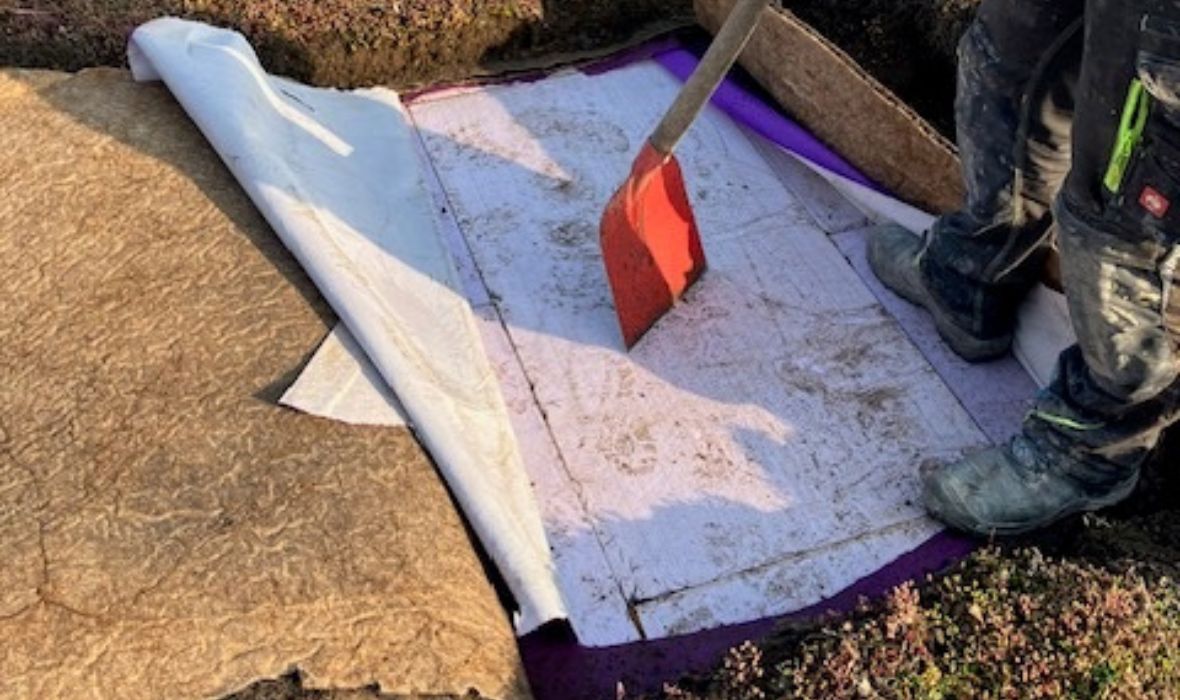
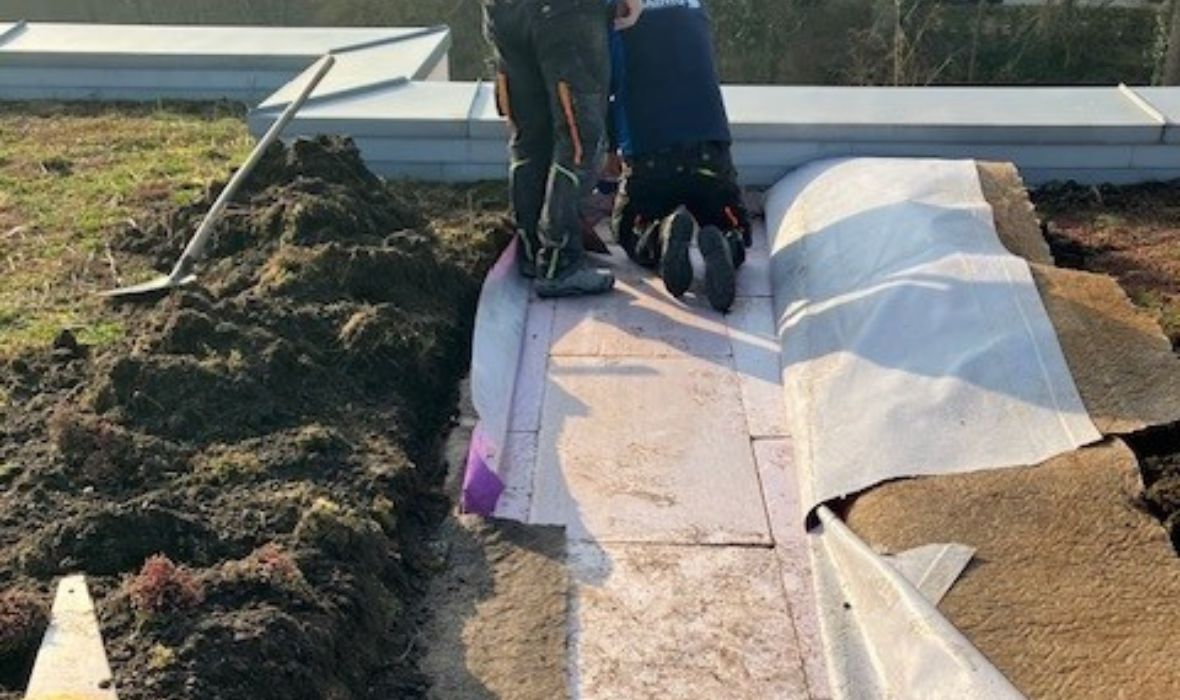
This is precisely where a long-term field test comes in: the Research Institute for Thermal Insulation (FIW) in Munich has examined JACKODUR® EVO 300 Standard insulation boards (180 mm thick) after three winter seasons, having previously been installed in a green inverted roof. The laboratory results from the samples show extremely low water absorption, as well as thermal conductivity values within the declared nominal range; the compressive strength was greater than 342 kPa. This sends a strong signal to architects and planners who, when it comes to inverted roofs, need one thing above all else: consistently reliable performance data.
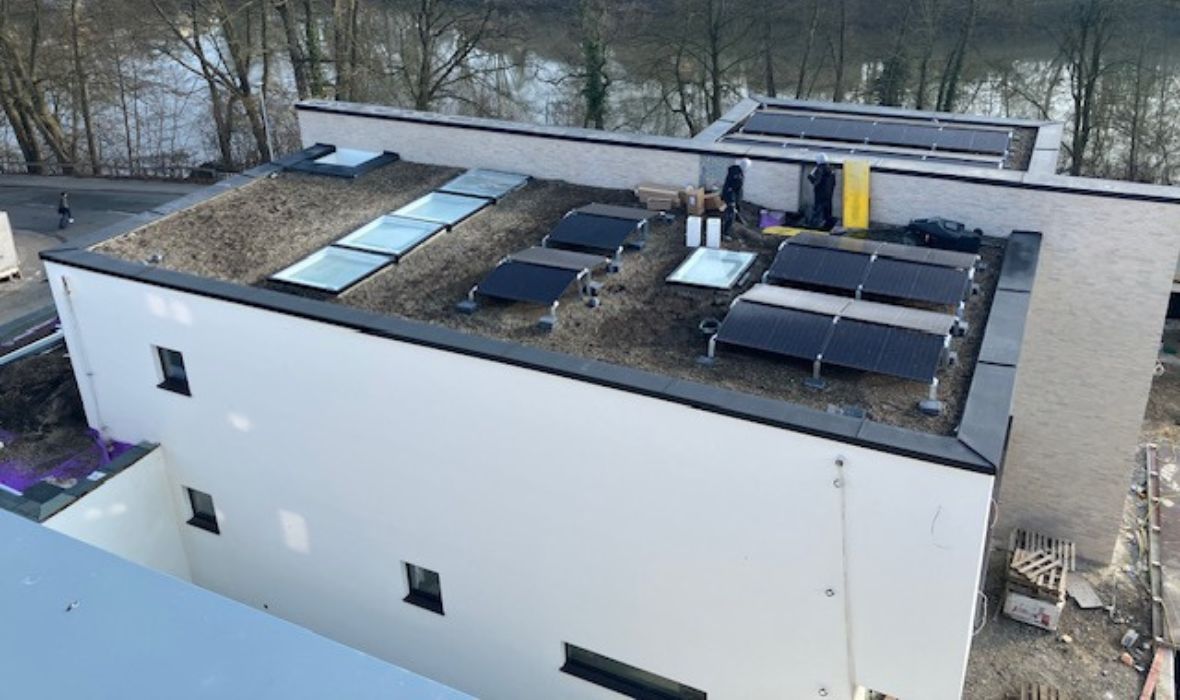
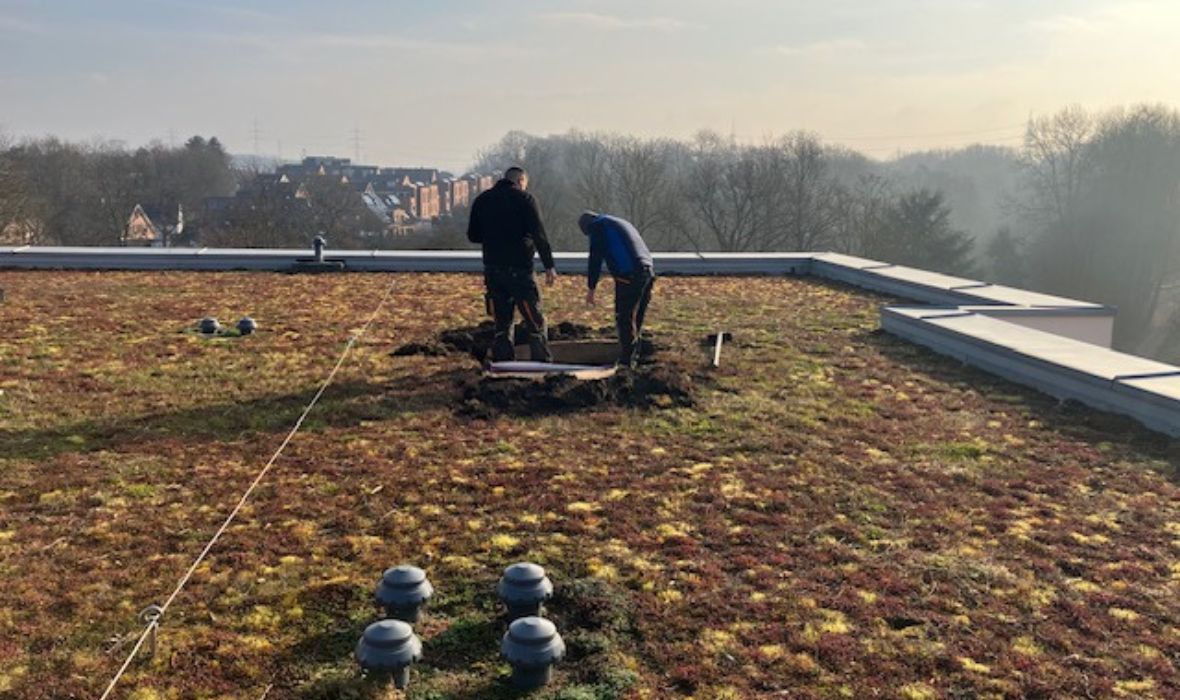
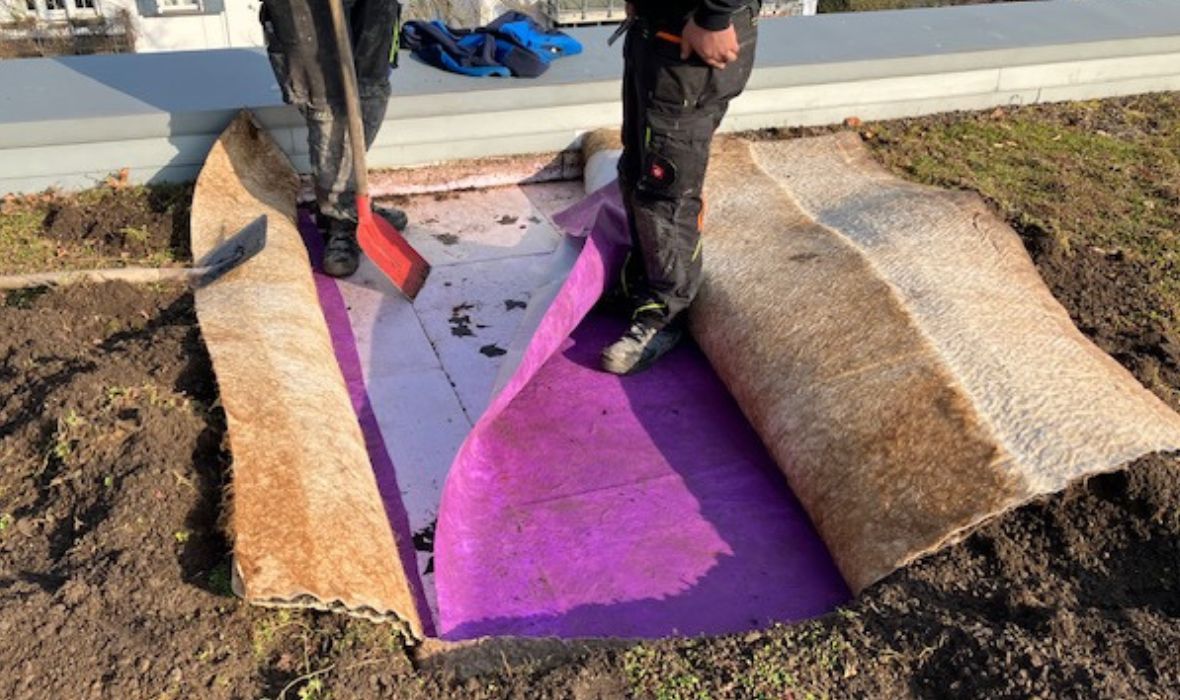
For the study, the FIW Munich took samples from the green inverted roof of an apartment block in Mettmann. The system design included, amongst other things, a substrate layer (with sedum vegetation), drainage, and a water-permeable separation layer above the insulation.
The aim of the study: To assess the suitability and durability of XPS insulation boards for use in inverted roofs over a period of several years – with a focus on thermal conductivity, compressive strength and moisture content in laboratory tests.
The lab results paint a clear picture:
These results clearly demonstrate that JACKODUR® EVO maintains its performance stability in inverted roof systems, not only in theory but also after several years of practical use.
Tino Dannenberg, Product Manager at JACKON Insulation by BEWI, oversaw the study: “With inverted roofs, what counts in the end is not the promise, but the evidence of performance in real-world conditions. Long-term experience can be gained under real-world conditions on site. This is the only way to reliably assess the actual performance of the insulation boards. The fact that the FIW measurements, taken several years after installation in a green inverted roof, fall within the range of our declared λ-value, confirms the product’s quality.”
Samples were also taken from the vapour-permeable separating layer JACKODUR® filter layer WA and tested for water vapour permeability. Even after a period of use, the measured values remained below the declared sd value of 0.1 m. It is therefore unlikely that vapour diffusion will be impaired due to soiling or ageing.
The system component therefore remains fully functional even after many years. This is an important consideration during the planning stage if green roof structures are to remain low-maintenance and reliable in the long term.
In addition to consistent performance figures, rapid and reliable installation is a key factor in the project business: single-layer installation up to 400 mm is a clear advantage here, which ultimately pays off in terms of meeting deadlines and keeping costs under control.
Furthermore, in the case of single-layer installation, the formation of a water film between two layers of insulation—as discussed in the context of multi-layer construction—does not occur. This is an important detail in terms of building physics that is significant in inverted roofs.
JACKODUR® EVO 300 is BBA-certified in the UK for use as inverted roof insulation (Certificate 21/5944). The British Board of Agrément (BBA) is one of the established, independent testing bodies in the British construction industry. BBA certification is frequently cited in specifications as reliable evidence of suitability, performance and durability, particularly when designers require a clear, external basis for product selection and construction details.
As a logical evolution of the established multilayer technology from JACKON Insulation by BEWI, JACKODUR® EVO offers key benefits for designers: the design thermal conductivity value remains consistently at λ = 0.033 W/(m·K) across all thicknesses (up to 400 mm).
This significantly simplifies tendering and documentation: insulation thicknesses can be flexibly varied within a project without changing the lambda value. This creates clarity in component structures and detailed planning.
JACKON Insulation by BEWI adopts an environmentally friendly approach to manufacturing: the cell contents consist of air, and the product is free from HBCD flame retardants as well as propellants containing CFCs, HCFCs or HFCs.
Produkt: JACKODUR® EVO 300 Standard (XPS-Dämmung in Multilayer-Technik produziert)
Anwendungsschwerpunkte: Umkehrdach (bekiest / begrünt), außerdem als Perimeterdämmung, Kelleraußenwanddämmung, Kerndämmung, Dämmung unter Estrich
Dicken: 40 - 400 mm (einlagige Verlegung bis 400 mm)
Wärmeleitfähigkeit: λD = 0,032 W/(m·K) (konstant über alle Dicken); Bemessungswert λ = 0,033 W/(m·K)
Druckfestigkeit (deklar.): 300 kPa
Langzeit-Praxischeck durch das FIW, im begrünten Umkehrdach: sehr geringe Wasseraufnahme; Wärmeleitfähigkeit der feuchten Probe max. 0,0321 W/(m·K); Druckspannung bei 10 % Stauchung > 342 kPa (Quelle: Untersuchungsbericht FIW München)


Helena Platte
Marketing/Public Relations
+49 (0) 5204 99 55 330