For further information, please contact:
Helena Platte
Marketing/Public Relations
+49 (0) 5204 99 55 330

The basis for this is provided by green retention roofs, which are designed to retain rainwater and must be able to withstand high loads over the long term. The structural basis consists of an inverted roof system using JACKODUR® KF 300 Standard XPS insulation boards from JACKON Insulation by BEWI.
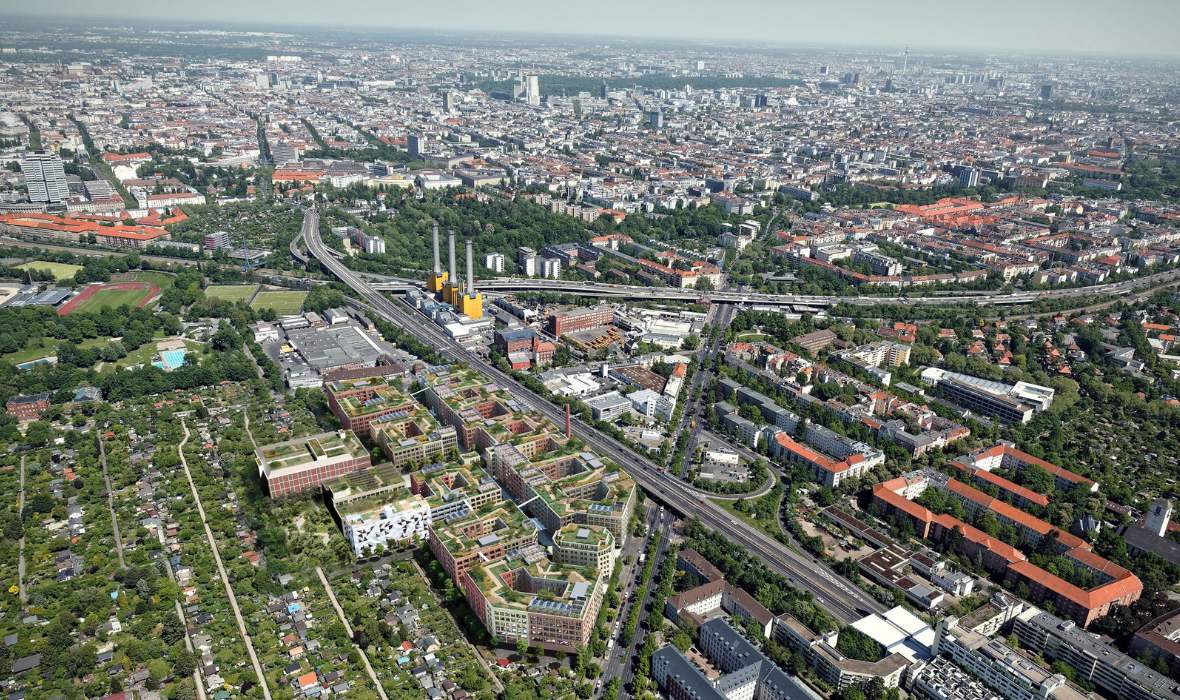
GoWest deliberately draws on the tradition of Berlin’s 19th-century industrial estates and translates that principle into a modern urban quarter where work, craftsmanship, culture, gastronomy and urban production all take place side by side. The aim is to create a vibrant urban space rather than a single-purpose office complex.
“We didn’t want to create an office district that’s deserted after 6 pm,” says architect Christian Jörder, one of the managing directors of the Berlin-based planning firm CKSA GmbH, which was responsible for the project. “The intention was quite clearly to develop a neighbourhood where people would enjoy spending time even after work and at the weekend, and which would thus become a home away from home in the best sense of the word.”
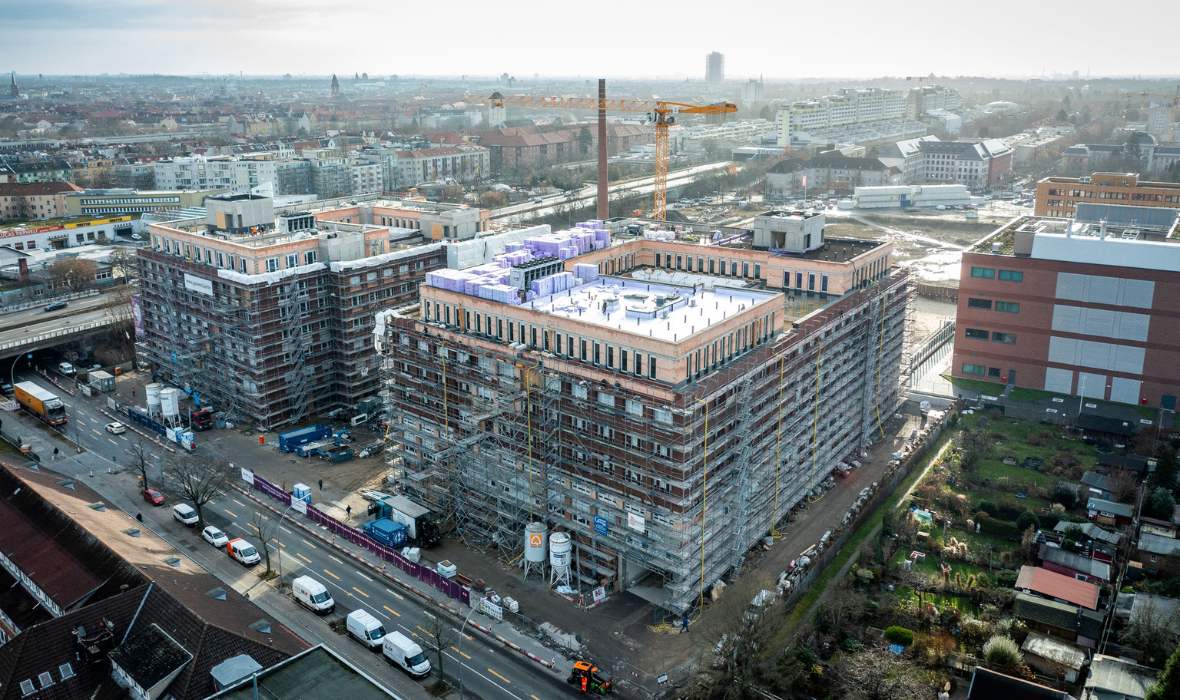
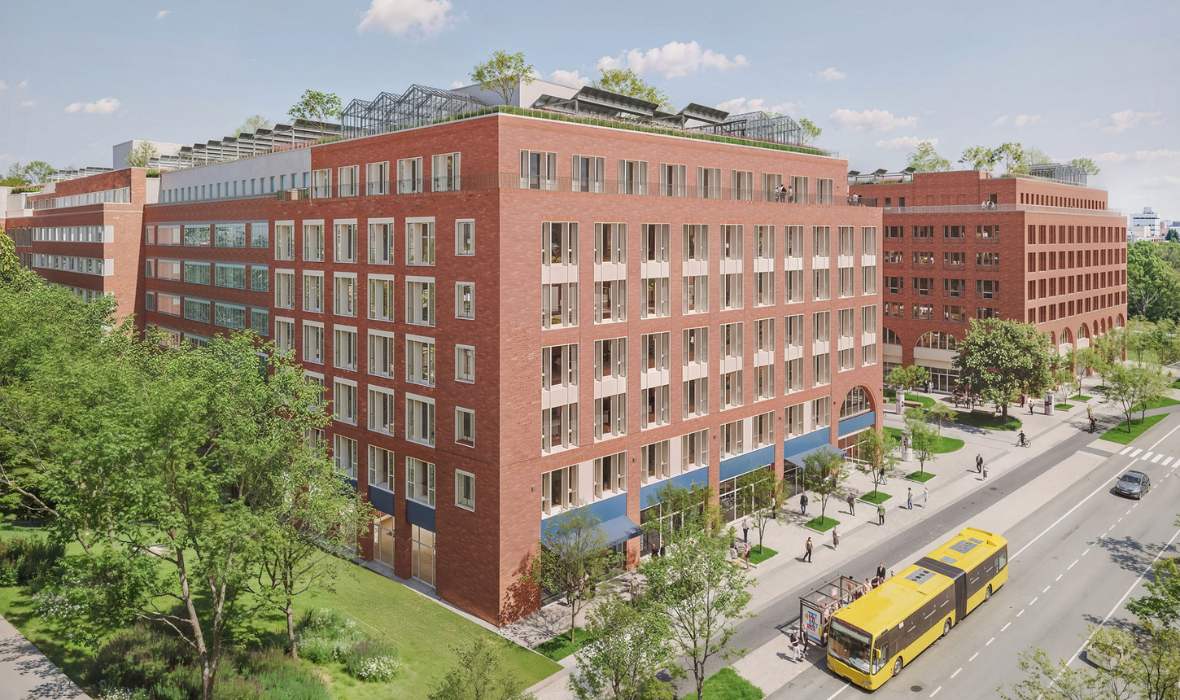
The urban development concept provides for twelve building plots, totalling 240,000 m2 of gross floor area. Each block is divided into four separate buildings, allowing for a variety of floor areas and flexible usage options. Red clinker brick serves as a unifying façade motif, reflecting the site’s industrial history.
The new Commercial Quarter has already received several awards for its planning approach. In 2019, GoWest was awarded the DGNB pre-certification for neighbourhoods at Platinum level, followed in 2024 by a further DGNB pre-certification at Platinum level for the first construction phase.
What sets GoWest apart from many other neighbourhood development projects is particularly evident on the rooftops. These are not only being greened, but are also being designed as separate levels for specific uses. Across all the building plots, around 15,000 m² of roof space is to be created for urban agriculture.
“And not in the sense of urban hobby gardening with small raised beds, but on a scale operated professionally by farmers,” explains Christian Jörder. In future, the roof spaces are set to provide fruit, vegetables and even the neighbourhood’s own honey – directly for the residents of the neighbourhood. Bees were introduced to the project site as early as 2018.
The agricultural use is complemented by elevated photovoltaic systems. This is a sensible combination, as the vegetation improves the microclimate on the roof surfaces through evaporative cooling, thereby also having a positive effect on the efficiency of the PV modules.
Rainwater management also plays a key role. In densely built-up urban areas in particular, the sewerage system can quickly become overloaded during heavy rainfall. In Berlin, moreover, the discharge of rainwater is strictly limited. A decentralised water management system was therefore developed for the GoWest project, based on the ‘sponge city’ principle.
“This only works if we retain water on the site, release it gradually or use it directly,” says Jörder, describing the planning context. Roof surfaces play a key role in this: they store rainfall, delay runoff, help to cool the neighbourhood through evaporation and, at the same time, provide water for rooftop farming. The system is supplemented by large cisterns in the basements.
This creates a roof landscape that fulfils several functions at once: rainwater management, climate adaptation, promoting biodiversity, energy generation and productive agriculture.
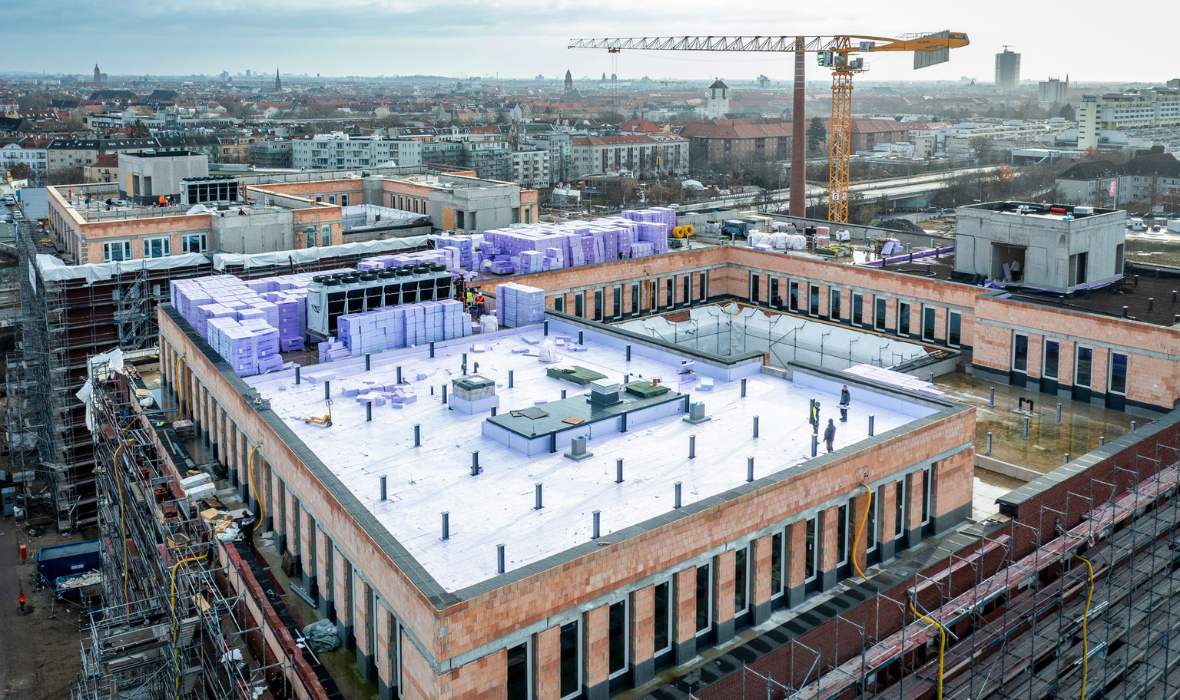
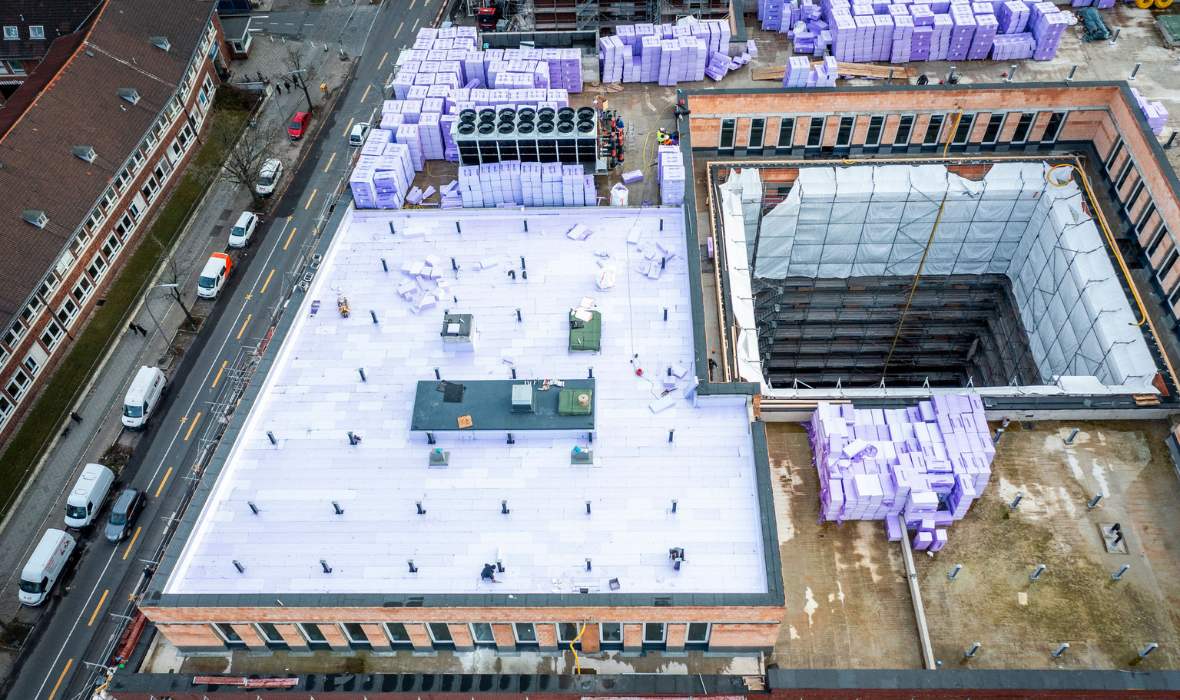
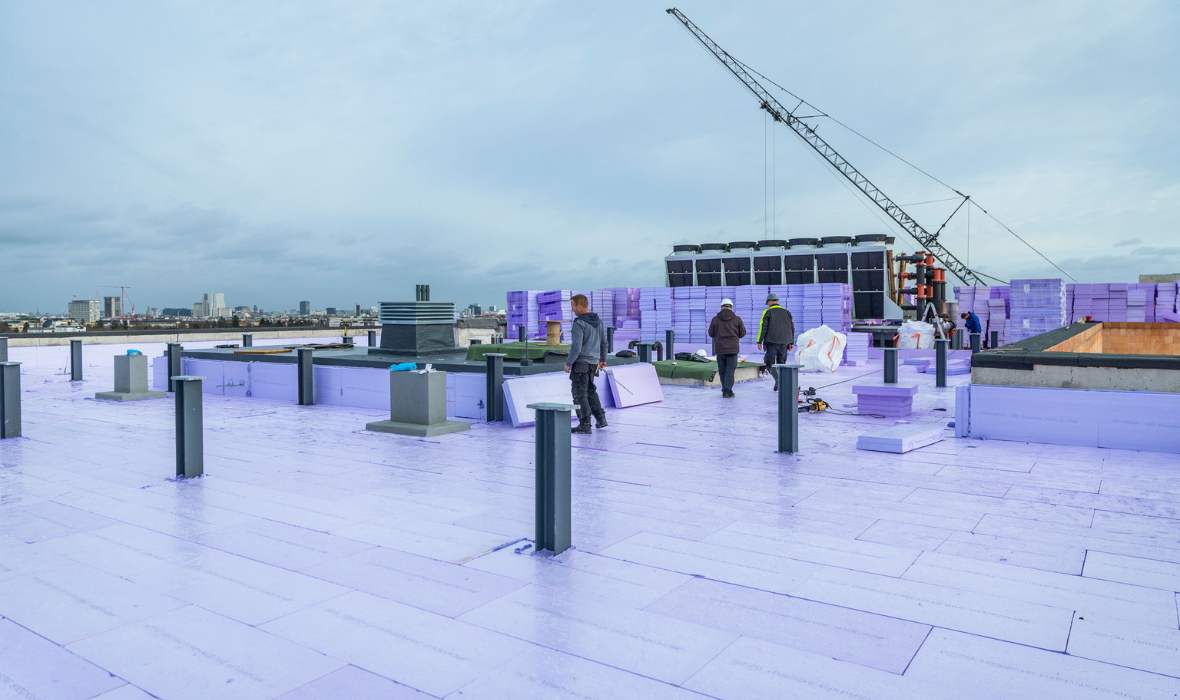
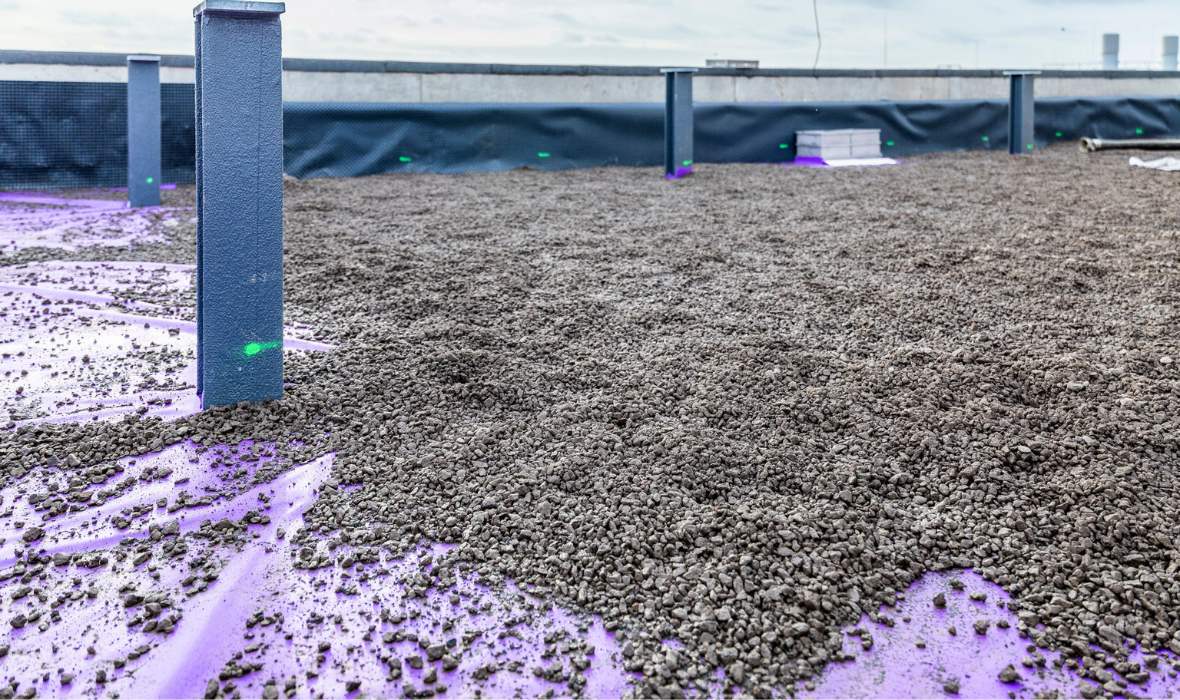
This multifunctional design places exceptionally high demands on the roof structure, the base of which here consists of waterproof concrete. Building on this, the flat roofs are constructed as inverted roofs. In this design, the XPS thermal insulation lies above the waterproofing layer and protects it from mechanical stress, extreme temperature fluctuations and weathering. Particularly in the case of intensively used retention and green roof areas, this structural protection is a key advantage for the service life of the roof membranes.
The dimensions of the structure highlight the technical challenge: “We are creating a structure approximately one metre high – consisting of 300 mm-thick, single-layer XPS insulation, as well as around 700 mm of substrate and intensive greening,” explains master roofer Lukas Plaschna of Heinrich Dachtechnik GmbH in Berlin. “This results in enormous compressive loads, whilst at the same time placing high demands on thermal insulation performance.”
The high compressive strength of JACKODUR® KF 300 Standard was therefore a decisive factor. The XPS insulation boards are ideally suited to sustained high loads and are highly resistant to moisture – important requirements for green and water-bearing inverted roof structures.
“At the same time, we were able to draw on our positive experiences from previous projects with JACKON,” said Plaschna. “This combination of technical performance and a long-standing working relationship was a key factor in our decision to choose JACKODUR®.”
In addition to compressive strength, workability on site also played an important role. The roof areas insulated with JACKODUR® are spread across two construction sites and include main roofs, staggered storeys and plinth areas in inner courtyards and along external walls. In total, around 8,000 m² of XPS insulation, including all connections, was installed.
Integrating the numerous detail points proved particularly challenging. “On site, around 210 steel columns had to be integrated into the insulation layer. Added to this were numerous corners and built-in components,” reports Plaschna. “The boards could be cut to size precisely and finished to a high standard. The use of a hot-wire cutter proved particularly efficient, enabling even complex details to be implemented quickly and cleanly.”
The low weight of the XPS insulation boards also made site logistics easier: “In many cases, materials had to be moved by hand or in pallet loads using a pallet truck, as only a tower crane was available at the time of installation. The low weight of the XPS boards made things much easier for us here,” said the master roofer.
The inverted roof structure also offers advantages with a view to future dismantling: the insulation boards laid loosely on top of the roofing membrane can generally be separated more easily than bonded constructions. This makes it easier to sort the materials by type at a later stage. “Against this background, a bonded roof structure was not an option. Instead, a recycling-friendly inverted roof structure with XPS insulation was deliberately chosen,” explains Plaschna.
In addition to the material properties, the master roofer also highlights the smooth collaboration with JACKON Insulation by BEWI – from technical support, such as wind suction calculations, to logistics planning. Reliable delivery is a key factor, particularly on a project of this scale: “Deliveries were always reliable. Requests for changes were implemented at short notice without any problems, and new plans and calculations were produced promptly,” says Plaschna.
Even beyond the roof surfaces, the GoWest project adopts an approach centred on robust, durable and, as far as possible, simple structural solutions. “We wanted to build as simply as possible,” says Christian Jörder. Instead of highly technical façade and ventilation systems, as well as air conditioning, the concept relies, amongst other things, on solid external walls, natural window ventilation and structural thermal protection in summer achieved through deep window reveals.
This fundamental design philosophy is carried through to the roof structure: the inverted roof system using JACKODUR® KF 300 Standard creates a resilient, moisture-resistant and extremely durable foundation for roof use that goes far beyond traditional green roofing.
GoWest thus impressively demonstrates how flat roofs in densely built-up urban areas can be transformed into multifunctional spaces: they store water, cool the microclimate, generate energy, promote biodiversity and enable professional farming right in the heart of the city.
Helena Platte
Marketing/Public Relations
+49 (0) 5204 99 55 330