For further information, please contact:
Helena Platte
Marketing/Public Relations
+49 (0) 5204 99 55 330

Dr Plate, how important is sustainability for JACKON Insulation by BEWI?
Dr Plate: Sustainability is of central importance to us and deeply rooted in the corporate culture of JACKON Insulation by BEWI and the entire BEWI Group. We take responsibility -for the environment, for continuously improving the sustainability of our products, and for the people who work with and use them.
As a manufacturer of insulation materials and construction boards, we bear significant responsibility and can make a decisive contribution to sustainable, efficient, and long-lasting construction with our products, which significantly reduce CO2 emissions and conserve resources. The following figures illustrate the scale of the influence of the construction sector: Buildings are responsible for more than 40% of annual energy consumption in the EU, 35% of annual greenhouse gas emissions and around one-third of all materials consumed in the EU each year. It is also estimated that 75% of buildings constructed before 2000 have inadequate energy efficiency.
Thermal insulation is therefore one of the most effective ways of conserving resources and achieving climate targets. It is crucial to use products that minimise energy loss particularly effectively through their insulating effect. Our XPS solutions and insulation systems contribute to the high energy efficiency of the insulated building components with their excellent thermal properties, i.e. their low thermal conductivity. These outstanding insulation values also mean that less material is required for the same performance. All this makes XPS an indispensable part of modern insulation technologies and leads to lower CO2 emissions, thanks to lower raw material consumption. Building owners and users benefit in the long term from optimised energy costs and an increase in the value of the property.
What other properties make extruded polystyrene rigid foam, or XPS for short, a particularly sustainable insulation material?
Dr Plate: One crucial factor for sustainability is longevity: our XPS products literally last a building´s lifetime – and beyond – without the need for touch-ups, repairs or replacement. XPS consistently maintains its high insulation performance and mechanical properties. This means consistently high energy savings over many decades of building use, so that the energy required for production is quickly amortised and, over the life cycle, is exceeded many times over by energy and CO2 savings.
The requirements for construction products, both ecologically and functionally, are complex and it is always important to consider the totality of the properties and effects of a product on the structure. XPS combines high insulation performance with many other outstanding physical properties. In numerous applications, especially those subject to high stresses such as permanent moisture exposure, XPS demonstrates its unique advantages. It is highly pressure-resistant, dimensionally stable, closed-cell, insensitive to moisture, frost and thaw resistant, as well as rot-proof. This makes it ideal for perimeter insulation (insulation around the external walls of a building), on external basement walls, under floor slabs, in inverted roofs and under industrial screed, to name just a few applications. Our XPS products are capable of protecting the building fabric in the long term and significantly improving energy efficiency on a lasting basis.
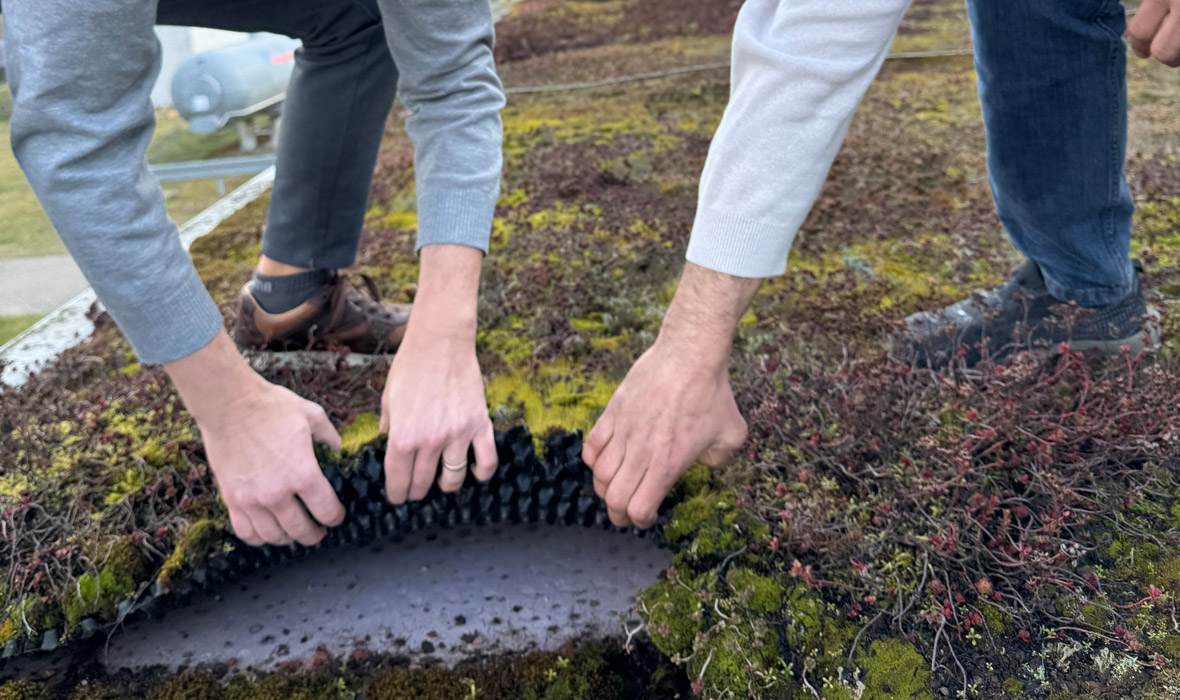
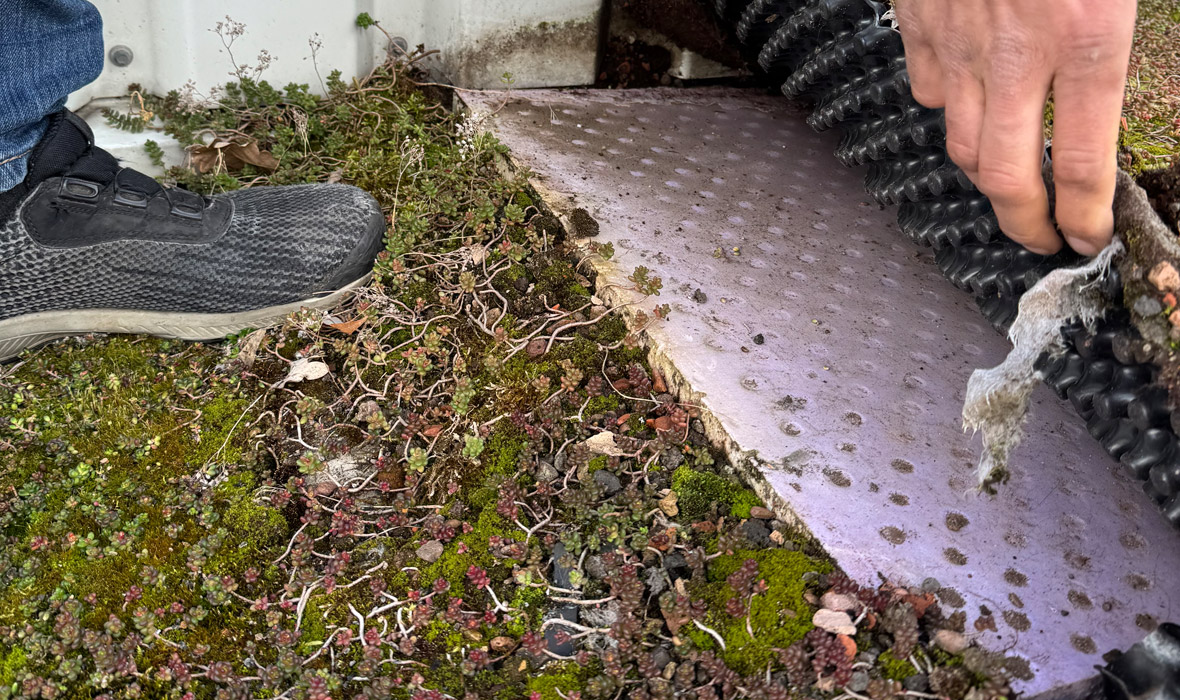
I would like to describe one of the numerous possible applications and the associated ecological added value in more detail: in a inverted roof, for example, our JACKODUR® XPS insulation boards serve as a solid, extremely pressure-resistant, reliable base for green roofs. This results in many advantages – from promoting biodiversity by creating new habitats for plants and small animals to rainwater retention and improving the urban microclimate. It has been proven that green roofs can alleviate the effects of excessive heat and heavy rainfall resulting from climate change. Furthermore, green roofs are often used as a base for photovoltaic systems. The high compressive strength and water resistance of XPS insulation is essential for all these requirements. I know of no other material that offers such a well-rounded performance profile.
Another key argument in favour of XPS is the possibility of reuse. In applications such as the inverted roof, our JACKODUR® insulation boards can simply be removed after many years of use and reused elsewhere – this saves resources and further optimises the ecological efficiency of our building materials.
What else are you doing to make the production of XPS more sustainable?
Dr Plate: For many years, we have been committed to consistently optimising our production processes in order to use raw materials even more efficiently and to minimise waste. To this end, we are implementing a variety of initiatives to make our products and processes more sustainable.
Here are some examples:
In addition, we use state-of-the-art technologies in our production to reduce energy consumption, as well as efficient extrusion processes and optimised foaming processes. All these measures are part of our overarching sustainability strategy, with which we are consistently pursuing our goal of reducing CO2 by more than 30% (for Scope 1 to 3 GHG) by 2030.
What role does the recycling of XPS play in the circular economy?
Dr Plate: Recycling is an essential part of our sustainability strategy. Polystyrene is one of the most recyclable polymers because it can be recycled without the use of additional chemicals. In addition, we are conducting intensive research – also within the entire BEWI Group – into ways of further increasing the proportion of recycled material in our products. There is also great potential in the recovery of polystyrene from EPS packaging. Our goal is to continuously increase the proportion of recycled polystyrene in the product – while, of course, maintaining the same reliable product properties!
We always consider the entire product life cycle. Closing loops is a central concern for JACKON Insulation by BEWI. In line with the ‘reduce, reuse, recycle’ sustainability concept, we want to keep minimising our use of raw materials, keep raw materials and other materials in the material cycle for as long as possible, continue extending the life cycle of products and send all of our remaining waste for recycling.
How would you summarise the advantages of XPS in one sentence?
Dr Plate: XPS is a highly insulative, durable, pressure- and moisture-resistant construction product that efficiently protects buildings against energy loss and thus makes an important long-term contribution to sustainable construction and climate protection. In short, XPS and products like JACKODUR® are indispensable for a wide range of construction applications in sustainable, climate-conscious construction.
Helena Platte
Marketing/Public Relations
+49 (0) 5204 99 55 330